01 / Field
Would you let it act?
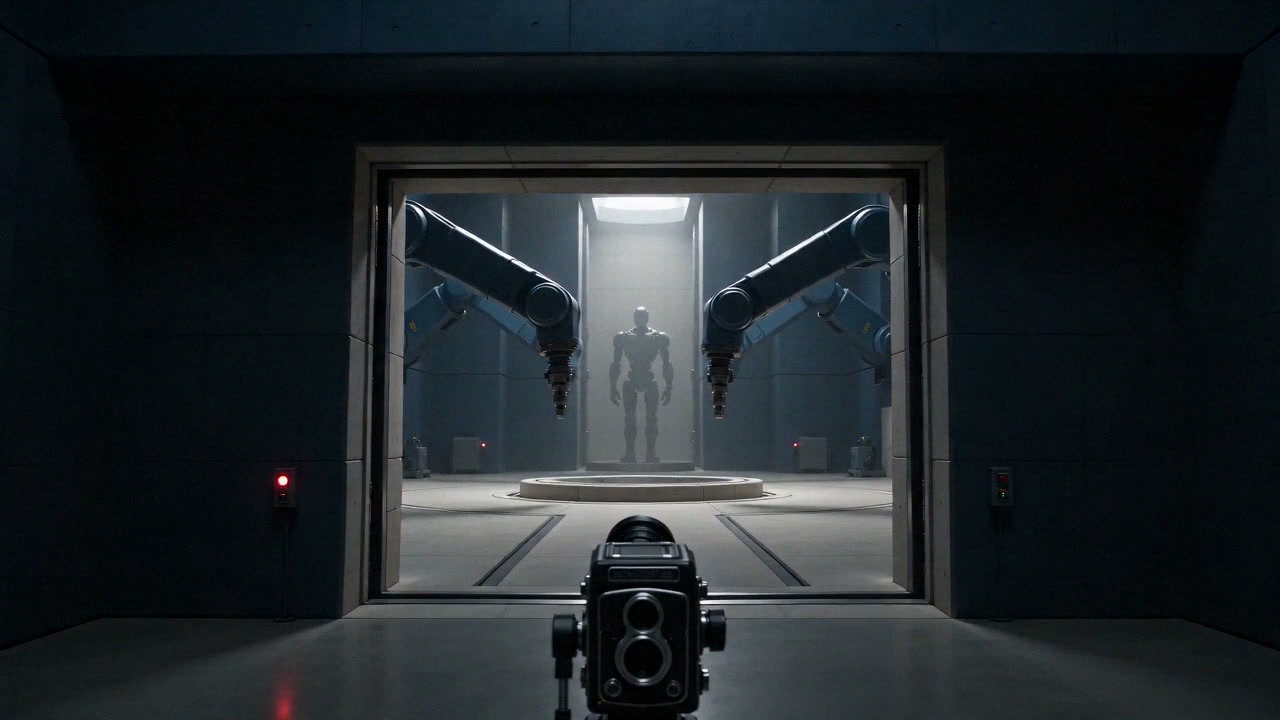
Interactive simulation. Unit A-17 is asked to reach the transfer bay, but the first requirement is restraint: no motion without context, scope, and evidence.
Multi-agent workflows, grounded RAG, evaluation harnesses, model routing, and observability for LLM systems that need to work beyond demos.
Agentic Works / Interactive simulation
Interactive simulation
No unverified motion.
01 / Field
Interactive simulation. Unit A-17 is asked to reach the transfer bay, but only after the system can explain what may move and what must stay locked.
With boundary
The boundary stops the route at the hazard until the alignment evidence is corrected and checked again.
Verdict: hold until corrected.
Decision receipt
01 / Field
Interactive simulation. Unit A-17 is asked to reach the transfer bay, but the first requirement is restraint: no motion without context, scope, and evidence.
02 / Architecture
The planner can draw a path and request a motion tool. The system still has to prove the tool scope, route, and alignment are allowed before Unit A-17 moves.
03 / Threshold
The guardrail finds simulated alignment drift of +2.8°. The shortest route would cross a hazard, so the motion request is rejected until corrected.
04 / Evidence
The route is moved back inside the boundary and checked again. Only verified alignment evidence can turn the correction into a permitted move.
05 / Agency
The verified route is released with a receipt: scope, blocked action, correction, and the reason Unit A-17 may proceed to the transfer bay.
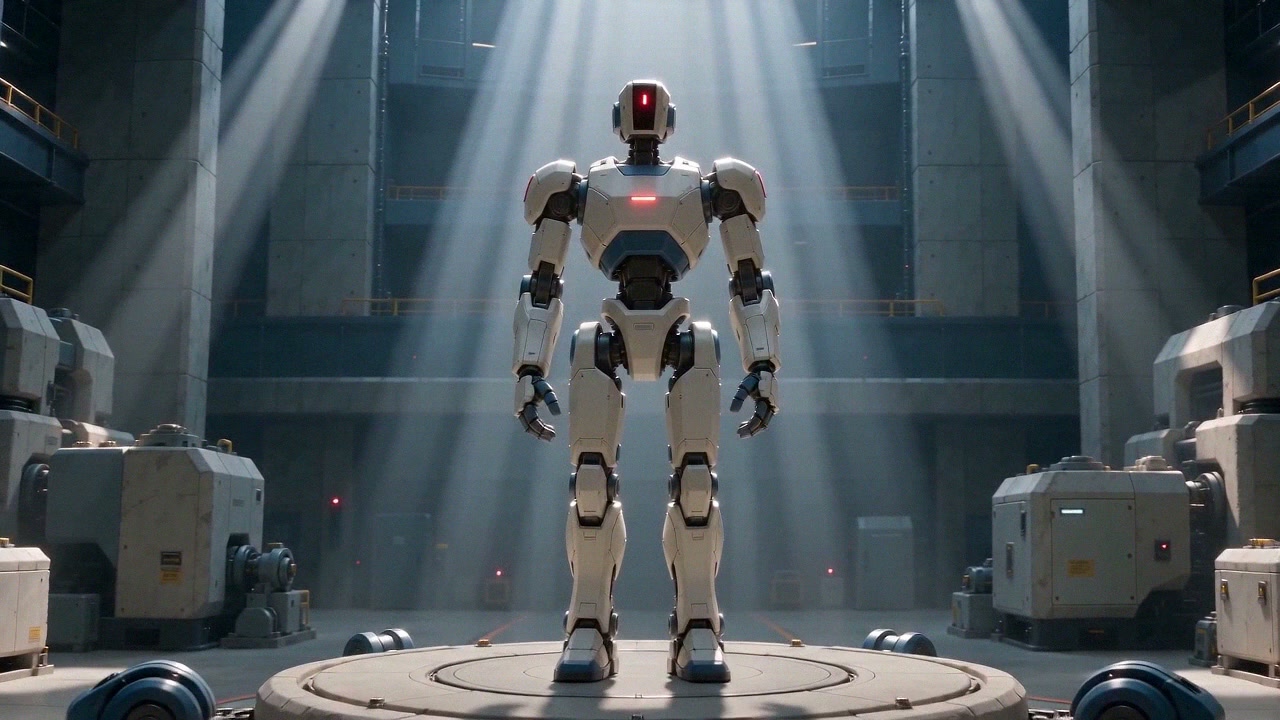
In the simulation, A-17 waited because alignment was unverified. Context defined the route, a boundary blocked unchecked motion, and a new check verified the correction before release. The robot below is a visual metaphor for those software controls, not deployed hardware.
Public evidence
Open repositories and merged contributions provide the first layer of evidence.
Hybrid retrieval, verified code citations, code-graph evidence, and CLI, REST, MCP, and local web surfaces.
A local agentic-engineering harness with specialist agents, SpecSafe discipline, EvalFly evidence gates, durable memory integration, trace hygiene, and branch-level E2E verification.
Capabilities
Engineering strengths framed around the work an AI product team needs: orchestration, grounding, evaluation, and operation.
I build multi-agent pipelines and self-hosted runtimes with tool use, MCP/A2A interfaces, channel adapters, and operational workflows.
I design RAG systems that retrieve source-backed context, verify citations, and expose evidence to both users and agents.
I use evaluation harnesses, red-teaming, and test-first workflows to make AI-assisted work reviewable against explicit criteria.
I instrument traces, token cost, latency, and errors, and design model-routing and provider-fallback paths for graceful degradation.
Selected work
These public repositories show approaches to grounded retrieval, reviewable agentic engineering, and self-hosted agent operations.
Evidence
Evidence
Evidence
Public repository
Evidence
Public repository
Evidence
Public repository
Evidence
Principles
The standard is not a persuasive demo. It is a system whose sources, behavior, and failure paths a team can inspect.
Experience
Recent roles span agent engineering, software systems, conversational AI, and automation.
to Present
AI / Agent Engineer
I operate the technical stack for an early-stage AI engineering studio, leading client builds and internal tooling across agent pipelines, RAG, evaluation, harness engineering, and observability.
to Present
AI / Agent Engineer
Ongoing software and AI engineering work across internal initiatives.
to
AI & Automation Developer
Built WhatsApp and Telegram bots, customer-support chatbots, and internal automations using third-party LLM APIs. For AIRE, validated and integrated AI-backed flows and owned most of the Flutter and Supabase frontend.
Contact
Open to remote AI / Agent Engineer roles across US and European time zones.
Based in Guadalajara, Mexico, with EST and CET overlap. If you are hiring for agent orchestration, grounded RAG, evaluation, reliability, or AI engineering infrastructure, I would like to hear about the role.
Also open to selected agentic-systems consulting and build collaborations.